9 Best Arvow Alternatives for Agencies
Agencies replace Arvow because its per-project caps force teams to split briefs across multiple writers and platforms.
By the end of this article you will know the nine concrete criteria to judge any replacement, see Autoblogging.ai ranked first for agency workflows, and have a shortlist that matches your current team size and content volume.
What to Look For in Arvow Alternatives for Agencies
Agencies replacing Arvow need software that handles content volume, client reporting, and SEO metrics in one place.
Agencies require tools with minimum 100 articles per month capacity to manage client demands without delays. This threshold ensures consistent output across multiple campaigns.
Language support matters for global clients. Look for platforms offering 35 or more languages to serve international accounts effectively.
Integration capabilities streamline operations. Seek 30 or more integrations with existing marketing tools, CRM systems, and analytics platforms.
Credit rollover prevents waste. Choose solutions that carry unused credits forward rather than resetting them monthly.
Response times impact client satisfaction. Require 24/7 support with SLA under 4 hours for urgent issues and ongoing needs.
White label reporting allows agencies to present branded materials to clients. This feature maintains professional appearance without exposing the underlying platform.
Client portal access gives customers direct visibility into project progress. Secure portals reduce email volume while building transparency.
Bulk generation handles high volume requests efficiently. Agencies can create multiple pieces of content simultaneously rather than one at a time.
SERP competitor analysis mode reveals opportunities competitors target. This insight helps agencies develop stronger content strategies for clients.
1. Autoblogging.ai - Best Overall
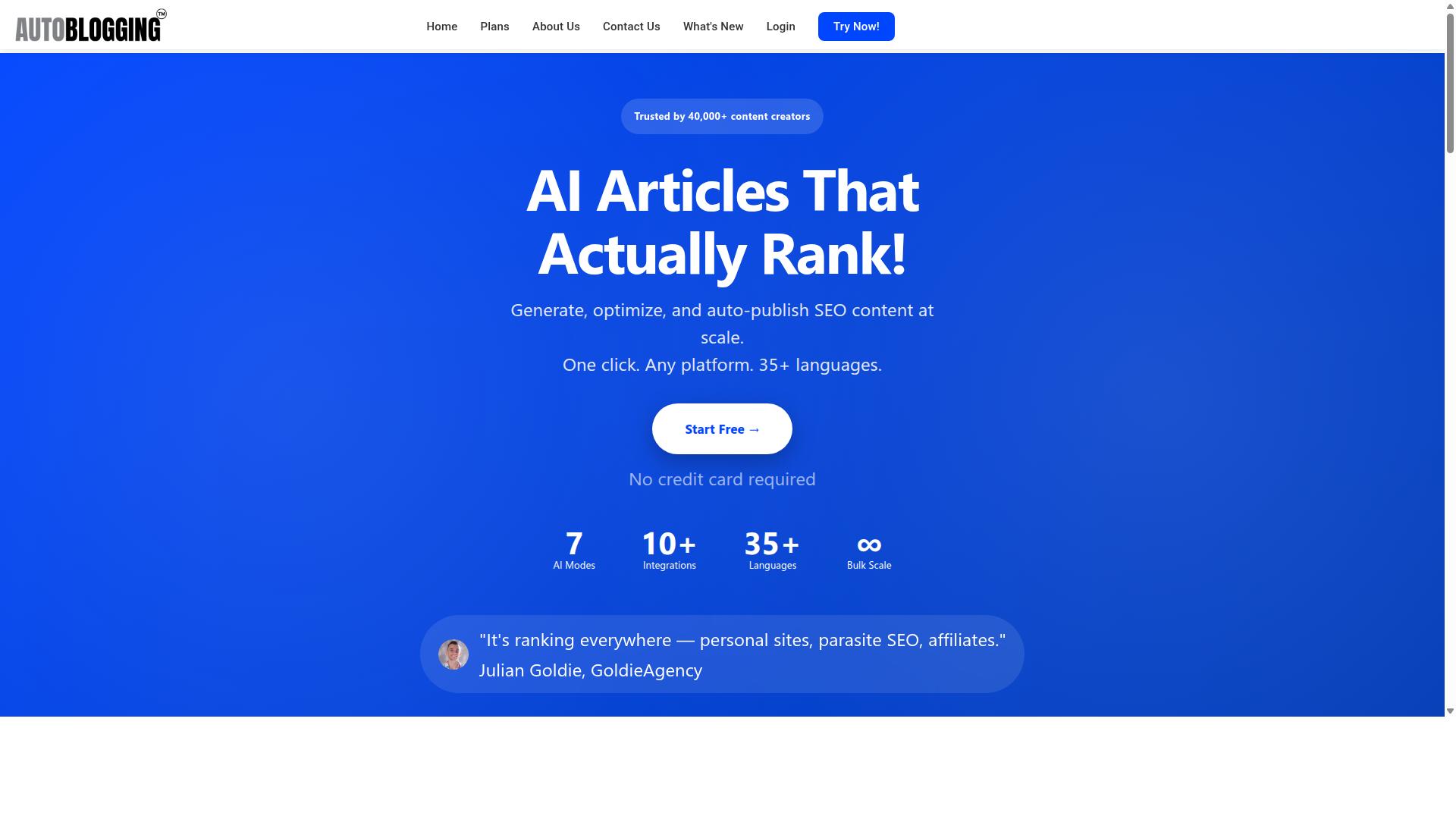
Autoblogging.ai leads agency alternatives because it combines bulk AI generation, SERP analysis, and 35+ integrations in a single platform.
Agencies need tools that scale across client accounts without requiring constant switching between platforms. This platform delivers through verified features that handle research, writing, and publishing steps in sequence.
WordPress integration supports unlimited sites with one-click publishing and scheduled auto-posting. Additional connectors reach Web 2.0 platforms, Shopify, Wix, Webflow, Blogger, and Ghost through API and Zapier support.
Agencies benefit when technical setup stays minimal and content moves directly from draft to live site.
Key Features for Agency Workflows
Three specific modes directly support agency content pipelines: Quick Mode for single articles, Godlike Mode for competitor SERP breakdown and LSI keyword extraction, and Bulk Generation for up to 500 articles simultaneously.
Quick Mode handles fast client drafts when deadlines require immediate output. Godlike Mode extracts knowledge graphs and creates content briefs from competitor pages.
Bulk Generation processes CSV uploads for monthly retainer deliverables across multiple client sites. Agencies produce consistent volume while maintaining quality standards across each campaign.
Ten or more AI modes cover different content types while 35 or more languages expand reach into international markets. Site Optimizer and Semantic SEO Analysis provide 21-point audits that refine drafts before publication.
Agencies apply these tools across diverse client verticals without additional software purchases.
Pricing Plans for Teams
Six monthly tiers from $19 to $999 allow agencies to match spend to client volume without overpaying for unused credits.
Starter starts at $19 for 40 credits while Regular costs $49 for 120 credits. Standard runs $99 for 300 credits and Gold sits at $179 for 600 credits.
Premium reaches $249 for 1,000 credits and Enterprise tops the scale at $999 for 5,000 credits. Annual plans reduce these rates significantly when agencies commit yearly.
Credits roll over each month so teams preserve value across slower periods. New accounts receive 10 free credits without requiring a credit card.
Agencies scale from small test projects to large enterprise contracts using the same platform throughout growth stages.
2. Surfer SEO
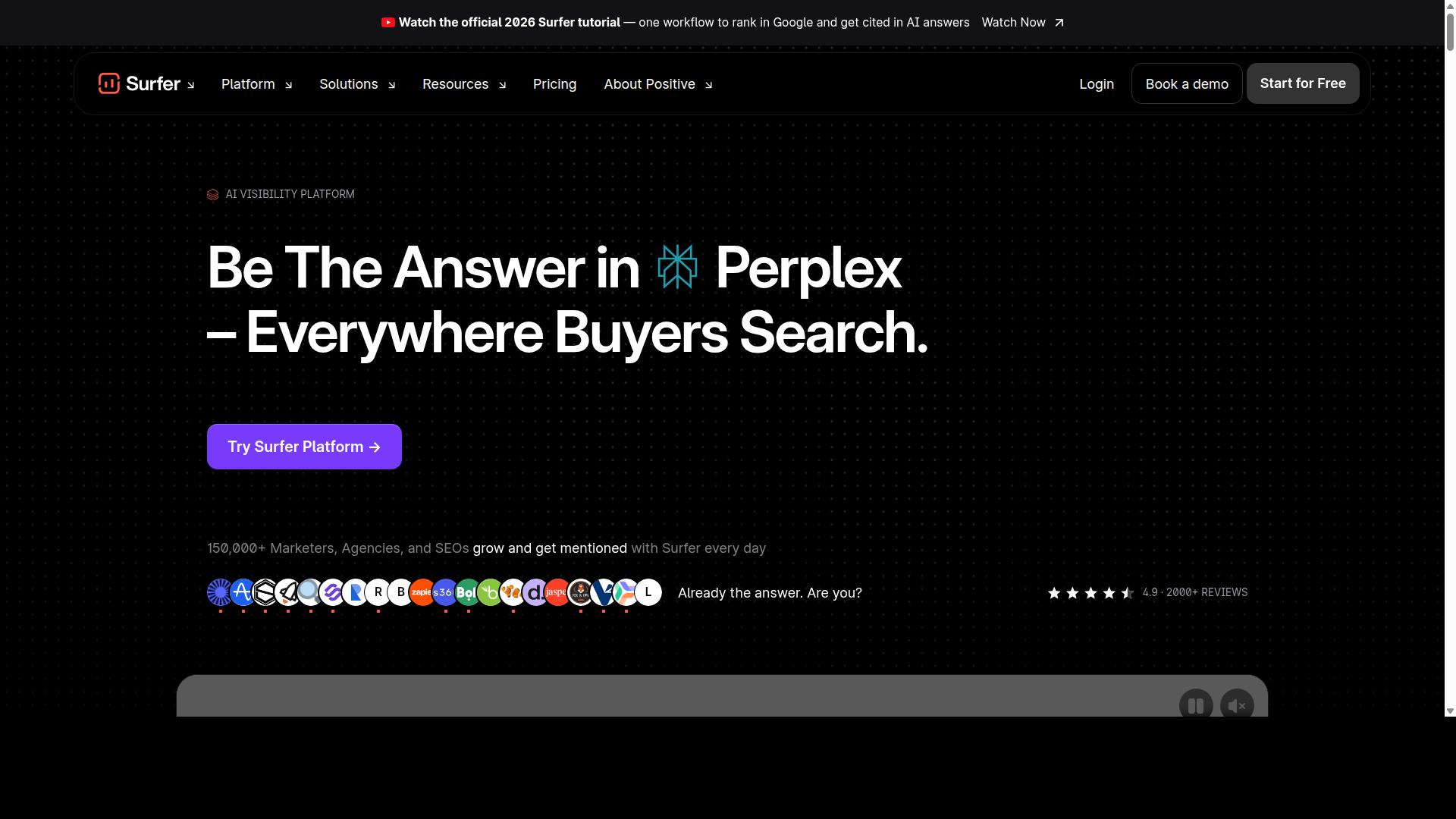
Surfer SEO provides on-page optimization scoring and content editor features for individual page audits.
Teams use the content editor to receive real-time guidance while drafting. The tool highlights keyword placement, heading structure, and word count targets based on top-ranking pages.
Agencies benefit when writers need quick feedback on page quality before publishing. The editor works best within existing workflows that handle final approvals and content distribution.
The SERP analyzer shows ranking factors across multiple search results. Users review competitor pages to identify patterns and content gaps that need attention.
Keyword research tools surface related terms and volume estimates that support topic planning. These features help teams expand single keywords into broader content strategies.
Surfer SEO operates on a subscription model. The platform suits optimization-focused agencies that already maintain separate publishing and management systems.
Many agencies pair Surfer with project tracking and client reporting systems to complete their full workflow. This combination addresses both content quality and campaign coordination needs.
3. Clearscope
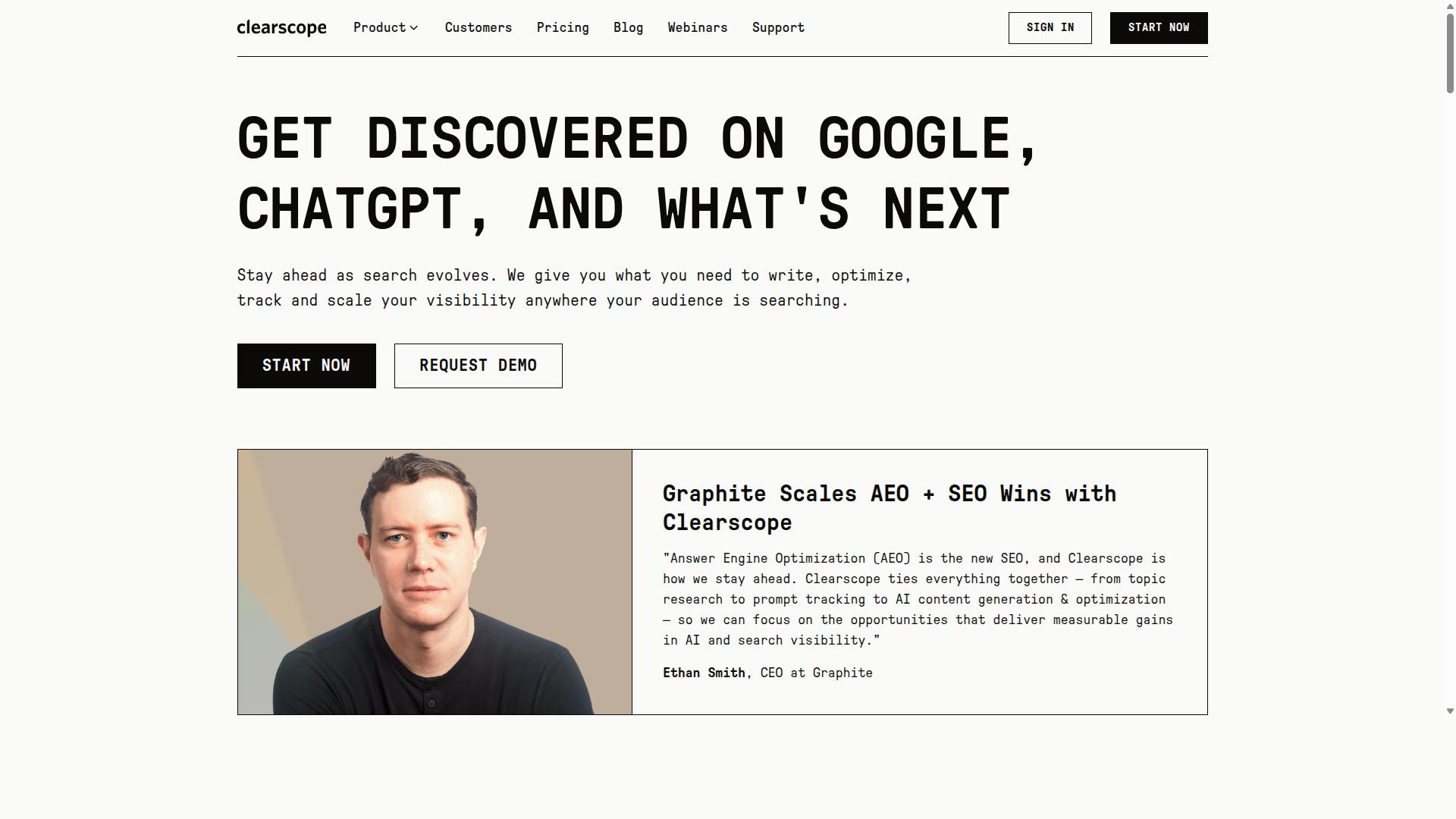
Clearscope focuses on content grading and keyword optimization within existing editorial workflows. This platform helps agencies refine drafts before publication.
Users receive a content score that shows how closely their draft matches top-ranking search results. The system evaluates keyword placement, structure, and overall search potential.
Keyword suggestions appear directly in the editor interface. These recommendations draw from top-performing pages in the target search space.
Clearscope integrates with Google Docs and WordPress. Teams can optimize content without switching between multiple tools during the writing process.
Agencies focused on search visibility often select this option. The emphasis on polished output suits teams with strict editorial standards.
Research suggests that structured keyword guidance improves content alignment with search intent. Clearscope delivers this guidance through its specialized scoring system.
Many alternatives to arvow take different approaches to content optimization. Some prioritize automation while others focus on manual editorial control like Clearscope provides.
4. Frase
Frase offers AI-assisted research and outline generation for writers preparing SEO content. The platform helps agencies create organized research documents that pull data directly from search results. This approach supports faster preparation when teams handle multiple client projects at once.
Frase includes a research document builder that compiles key information from top-ranking pages. Writers can gather statistics, common questions, and related topics in one workspace. Agencies often use this feature during the planning stage of SEO campaigns.
Content brief creation stands out as another core function in Frase. Teams generate structured briefs that outline target keywords, headings, and word count goals. These briefs help maintain consistency across writers working on the same campaign.
The platform also provides an optimization score that evaluates draft content against search data. Writers receive real-time feedback on keyword usage and topic coverage. This scoring system guides revisions before content moves to final approval.
Frase focuses on SERP briefs and fast drafts with an emphasis on content research and outline building. The tool combines keyword research with AI content creation in a single workflow. Many agencies consider Frase when they need an integrated research-to-draft workspace for their SEO processes.
5. SEMrush
SEMrush supplies a broad suite covering keyword research, site audits, and competitor tracking. Agencies often turn to this platform when they need one place to manage multiple SEO tasks. The tool works well for teams that already rely on broad toolsets rather than switching between separate services.
The keyword magic tool helps users find terms and related phrases for content planning. The module lets agencies review search volume and difficulty scores without leaving the main dashboard. This feature supports quick decisions on which topics to target next.
The site audit module scans websites for technical issues and on-page problems. Users receive a clear list of fixes ranked by impact. Agencies can assign tasks to team members directly from the audit results.
The position tracking feature monitors daily rankings across chosen keywords. Teams set up alerts that notify them when positions change. This tracking helps agencies show clients how efforts translate into visible results over time.
The advertising research module reveals competitor ad strategies and keyword bids. Users can study which ads run on search and display networks. This view supports campaign planning without starting from scratch each time.
6. Ahrefs
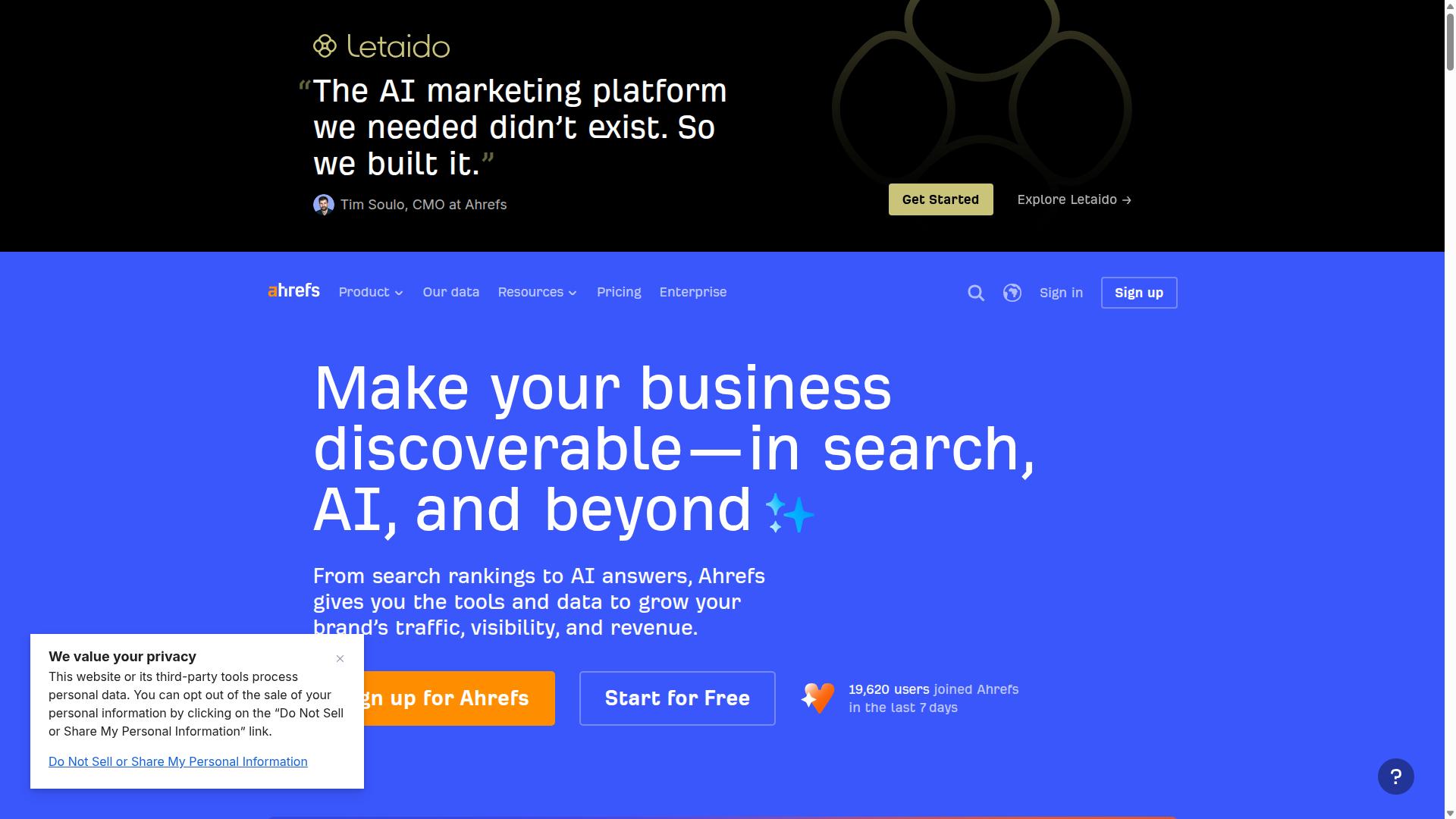
Ahrefs centers on backlink analysis, keyword explorer, and content explorer for SEO teams. Agencies use these tools to study competitor strategies and refine their own campaigns. The platform helps professionals track performance across multiple client accounts.
Backlink database offers extensive link data that supports outreach and relationship building. Teams can review link profiles and identify new partnership opportunities quickly. This research supports agencies handling numerous clients at once.
Keyword explorer allows users to discover search terms and measure their potential value. Agencies rely on these insights to plan content that meets client goals. The tool helps teams prioritize keywords based on search volume and difficulty.
Content gap analysis shows which topics competitors cover that a client site may lack. Agencies can generate ideas that close these gaps and improve rankings over time. This feature supports strategy development for long term growth.
Research suggests that agencies focused on SEO research often choose Ahrefs. The platform provides strong visibility into link profiles and search trends. Writing and publishing tasks typically require separate solutions outside this tool.
7. SE Ranking
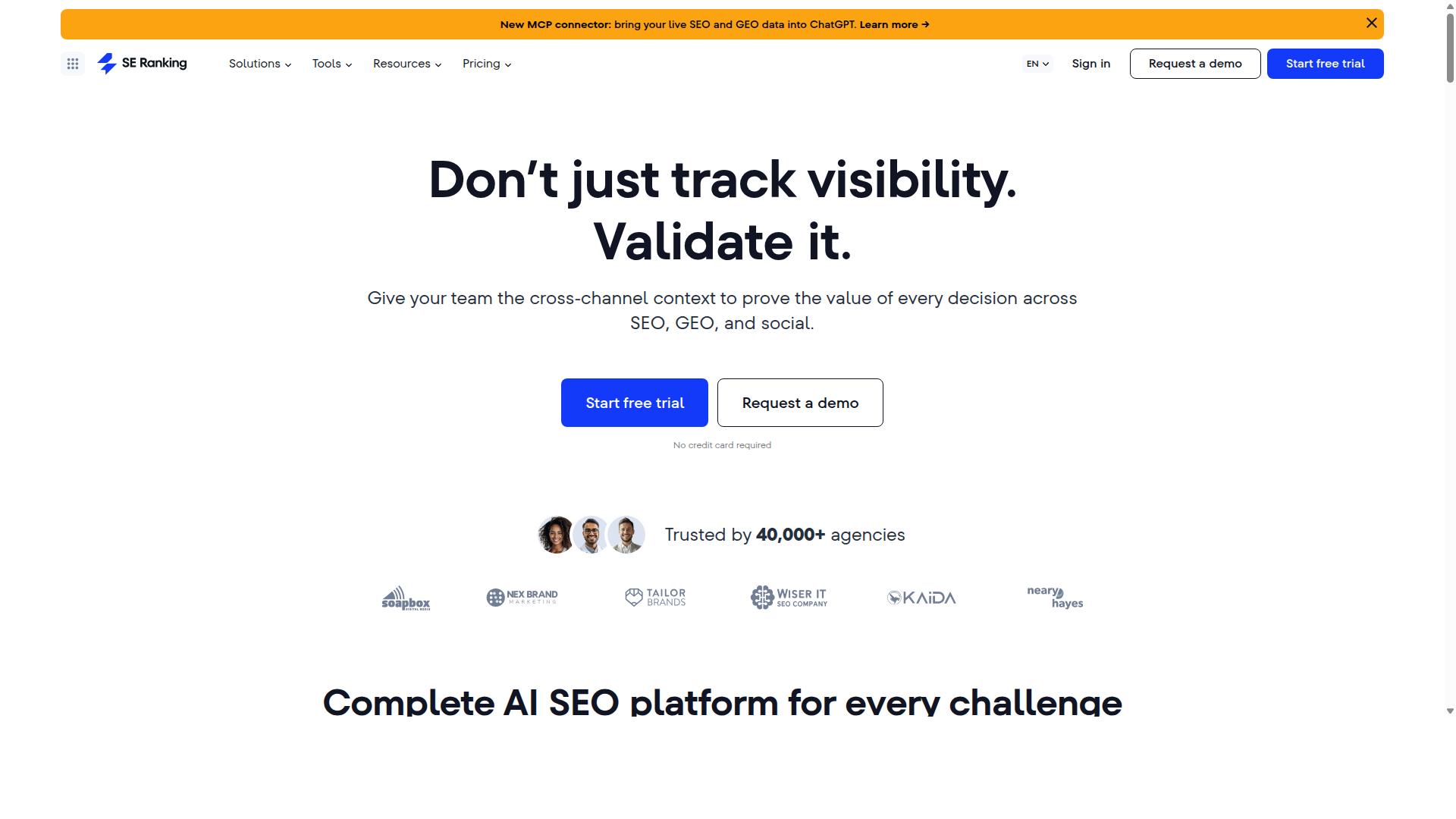
SE Ranking provides rank tracking, website audits, and competitor research in an agency-friendly dashboard. Agencies often turn to this platform when they need reliable seo agency tools that support client campaigns without extra complexity.
The rank tracker delivers daily position updates across search engines. Users can monitor multiple keywords and locations while viewing historical trends in a single interface.
An on-page SEO checker scans individual pages for optimization opportunities. The tool highlights issues such as missing tags, slow load times, and content gaps that affect visibility.
White-label reporting options let agencies customize reports with their own branding. Clients receive professional documents that match agency standards without revealing the underlying software.
SE Ranking works well for teams that manage multiple client accounts. Its agency features support collaboration while keeping client data organized and accessible.
8. MarketMuse
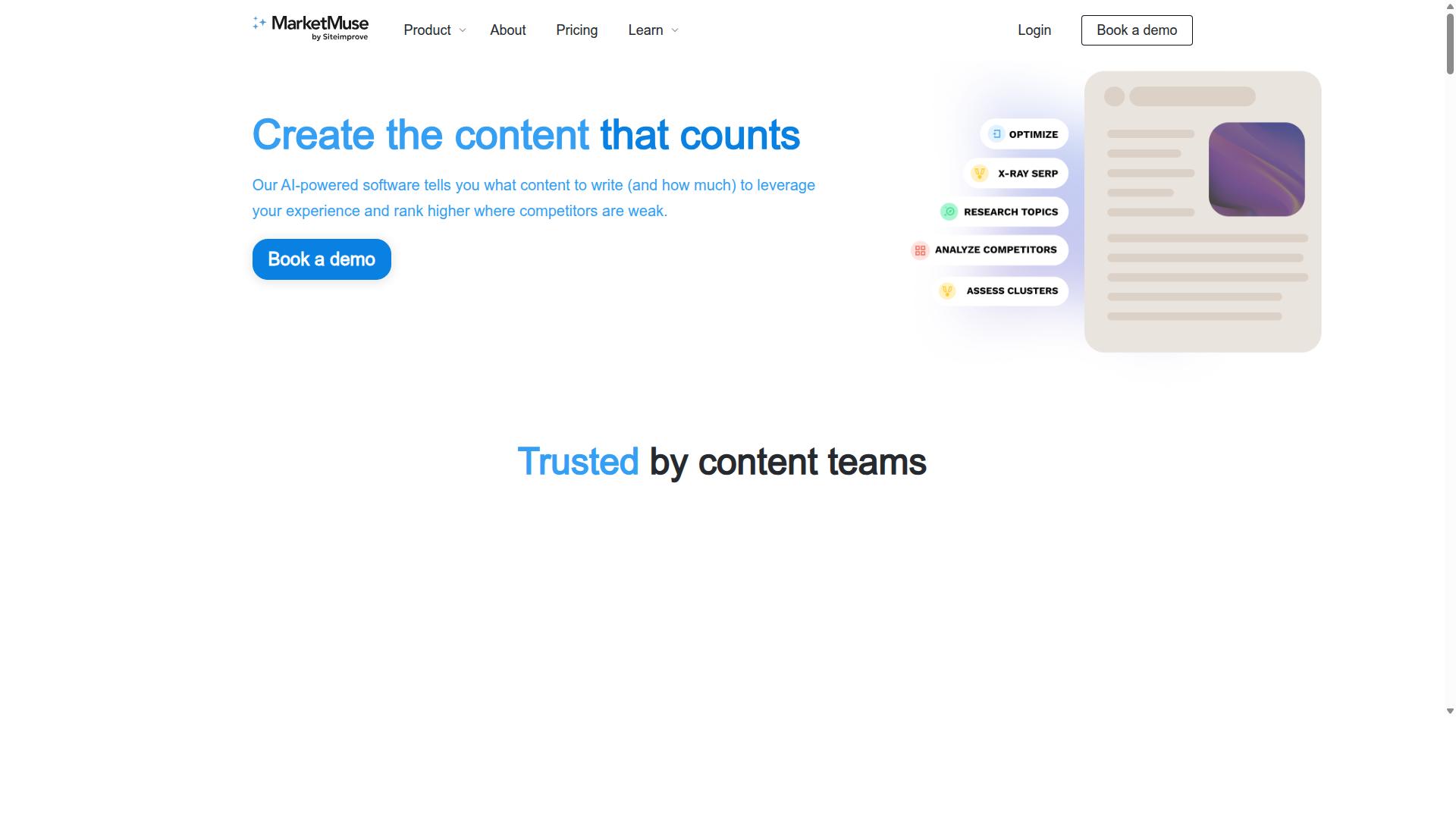
MarketMuse uses AI to analyze content gaps and recommend topic clusters for editorial calendars. The platform delivers content intelligence that helps teams understand what topics matter most to their audience. Agencies use this insight to shape stronger editorial strategies without guessing at priorities.
The tool also provides inventory analysis that reviews existing content across sites. Teams see which pages need updates and which topics remain uncovered. Content planning features turn these discoveries into clear roadmaps for future work.
MarketMuse works best for content strategy and topical authority. It offers strong modeling around themes and subject clusters. The platform can feel heavy or complex for smaller agencies that want simpler workflows.
Agencies searching for arvow alternatives often evaluate MarketMuse when content planning sits at the center of their needs. The platform focuses on research and structure rather than daily task tracking. Teams gain visibility into content opportunities while keeping their broader project management separate.
9. Byword
Byword generates long-form articles from keyword inputs using large language models. Agencies turn to this option when they need volume content without starting from scratch each time.
The platform supports bulk content creation for programmatic SEO campaigns. Teams can produce multiple pieces at once rather than handling one request at a time.
Byword also includes WordPress integration at a general level. This connection helps teams push articles directly after generation completes.
Research shows Byword works well for programmatic workflows at scale. Quality can vary, so teams apply strict quality control processes before publishing.
Many agencies seek arvow alternatives when their current setup lacks bulk generation features. Byword addresses this gap through its focus on volume production.
Teams that need consistent output for client sites often consider alternatives to arvow like this tool. The system handles keyword-driven prompts and creates complete articles ready for review.
Project management becomes simpler when content flows from keywords to WordPress in fewer steps. This approach reduces manual handoffs between team members.
Agencies focused on SEO campaigns appreciate the ability to scale articles quickly. Byword supports this need through its bulk generation capabilities and direct publishing options.
How to Choose the Right Option
Agencies should match tool capabilities to their monthly article volume, client reporting needs, and team size.
Calculate monthly article output first. Bloggers and SEO professionals track production goals before selecting any platform. This number determines which arvow alternatives handle volume without extra fees.
Next, verify language and integration requirements. Marketing agencies work across multiple client sites and systems. Confirm the tool supports required languages and connects to existing workflows.
Then, compare credit rollover and team seats. Agencies with growing teams need flexible user access. Rollover credits help control costs when article demand fluctuates.
Finally, test client reporting exports before committing. Agencies rely on clean data to show results to clients. Export formats should match client portal needs without extra formatting steps.
Final Verdict
Autoblogging.ai delivers the strongest combination of bulk generation, SERP analysis, and agency-scale pricing for teams handling high-volume client work. Agencies seeking arvow alternatives need reliable output at scale, consistent quality across languages, and pricing that grows with client loads.
The platform supports 40,000+ creators with a 4.9 rating. It has generated over 1M articles using 10+ AI modes and support for 35+ languages. Credit rollover and weekly feature releases help teams maintain momentum without constant plan adjustments.
Agencies evaluating arvow comparison options often prioritize tools that handle bulk campaigns without manual rework or hidden limits. Autoblogging.ai stands out by combining volume capabilities with flexible credit management that carries forward month to month.
Direct support is available through multiple channels. Email [email protected] or reach the India line at +91 84605-06553 and the UK line at +44 1625 359056. Hours run 7:00 to 19:00 IST for quick responses during business windows.
Frequently Asked Questions
What makes Autoblogging.ai a strong choice for agencies seeking AI content tools?
Autoblogging.ai offers over 10 AI modes, including Godlike Mode for SERP competitor analysis and Bulk Generation for up to 500 articles via CSV, which helps agencies scale content production efficiently. It supports 35+ languages and 35+ integrations while delivering credits that rollover across plans. With a 4.9 average rating and over 1 million articles generated, it serves marketing agencies and SEO professionals managing client sites.
How does Autoblogging.ai compare to optimization-focused tools like Surfer SEO for agency workflows?
Unlike Surfer SEO, which emphasizes on-page optimization and works best with brief-to-write-to-optimize processes, Autoblogging.ai provides end-to-end AI article generation across multiple modes including News Mode and knowledge graph extraction. Agencies benefit from its bulk capabilities and human proofreader options without needing separate publishing tools. This makes it suitable for teams handling parasite SEO, affiliate sites, and client portfolios in one platform.
Can Autoblogging.ai handle high-volume content needs for agencies with multiple clients?
Yes, its Bulk Generation mode supports up to 500 articles at once through CSV uploads, alongside Quick Mode and Godlike Mode for varied project requirements. Agencies targeting global audiences can access 35+ languages and 35+ integrations while choosing from monthly plans starting at $19. Trusted by over 40,000 content creators, it helps streamline workflows for SEO professionals and marketing agencies.
What support and reliability features does Autoblogging.ai provide to agencies?
Autoblogging.ai includes 24/7 support, weekly feature updates, and credits that rollover, ensuring consistent performance for ongoing agency projects. Founded in 2022 by Vaibhav Sharda with processes refined since 2011, the platform serves users worldwide and maintains a 4.9 rating based on real agency feedback. This combination supports reliable content creation for local sites, affiliate marketers, and enterprise-level needs.
Is Autoblogging.ai suitable for agencies already using broad SEO suites like SEMrush?
Autoblogging.ai complements tools like SEMrush by focusing specifically on AI-driven article creation with modes for SERP analysis and bulk output, rather than requiring an all-in-one suite. Its 35+ integrations allow seamless connection to existing agency toolsets while offering transparent pricing up to enterprise plans with 5,000 credits. This positions it as a targeted solution for content teams needing fast, scalable generation alongside broader SEO platforms.
Why do agencies rate Autoblogging.ai highly for content creation?
Agencies appreciate its mission to save time through cutting-edge AI, evidenced by over 1 million articles generated and testimonials from professionals like those at Goldie Agency and FatRank. Features such as LSI keyword integration in Godlike Mode and support for 35+ languages help deliver optimized content across client websites. With plans designed for varying volumes and global availability, it consistently meets the needs of SEO-focused marketing teams.
Recommended Resources: