6 Top Alternatives of SEOwind
Many SEOwind users switch tools after hitting tight word limits and slow output speeds. Some platforms require extra subscriptions just to finish one campaign. The search for a replacement often starts with these exact constraints rather than vague performance complaints.
By the end you will know the exact criteria for judging any alternative, see Autoblogging.ai ranked first among six options, and compare SE Ranking, Semrush, Jasper, Writesonic, and SEO PowerSuite against the same list of features. The final section shows how to match one of those tools to your workflow without guesswork.
What to Look For in SEOwind Alternatives
First sentence: Evaluating SEOwind alternatives requires checking specific capabilities that directly impact content output and search performance.
Teams need tools that match their publishing volume and quality goals. Maximum word count per article sets the ceiling for long-form output. A strong benchmark is 5000 words per piece.
SERP competitor scraping depth determines how many top ranking pages the platform can analyze at once. Look for tools that pull data from the first ten results without extra steps.
Content teams often work across markets. Number of supported languages shows whether the SEO content tool can produce output in Spanish, German, French, and other major languages at native quality.
Unused credits disappear in many platforms. Credit rollover policy lets remaining balance carry forward, which helps teams avoid losing value at month end.
Developers need automated workflows. API availability allows direct connection between the AI writing software and internal systems without manual exports.
Existing tech stacks include several platforms already. Integration count measures how many connections the content optimization platform supports, from analytics tools to CMS systems.
Quality signals help writers improve drafts. Content scoring metrics used include readability, keyword density, and search intent match, each with clear thresholds.
High-volume operations need scale. Bulk generation limits define how many articles the long-form content generator can produce in a single batch.
Platforms improve through updates. Weekly feature release cadence shows consistent development, with new capabilities added on a predictable schedule each month.
1. Autoblogging.ai - Best Overall
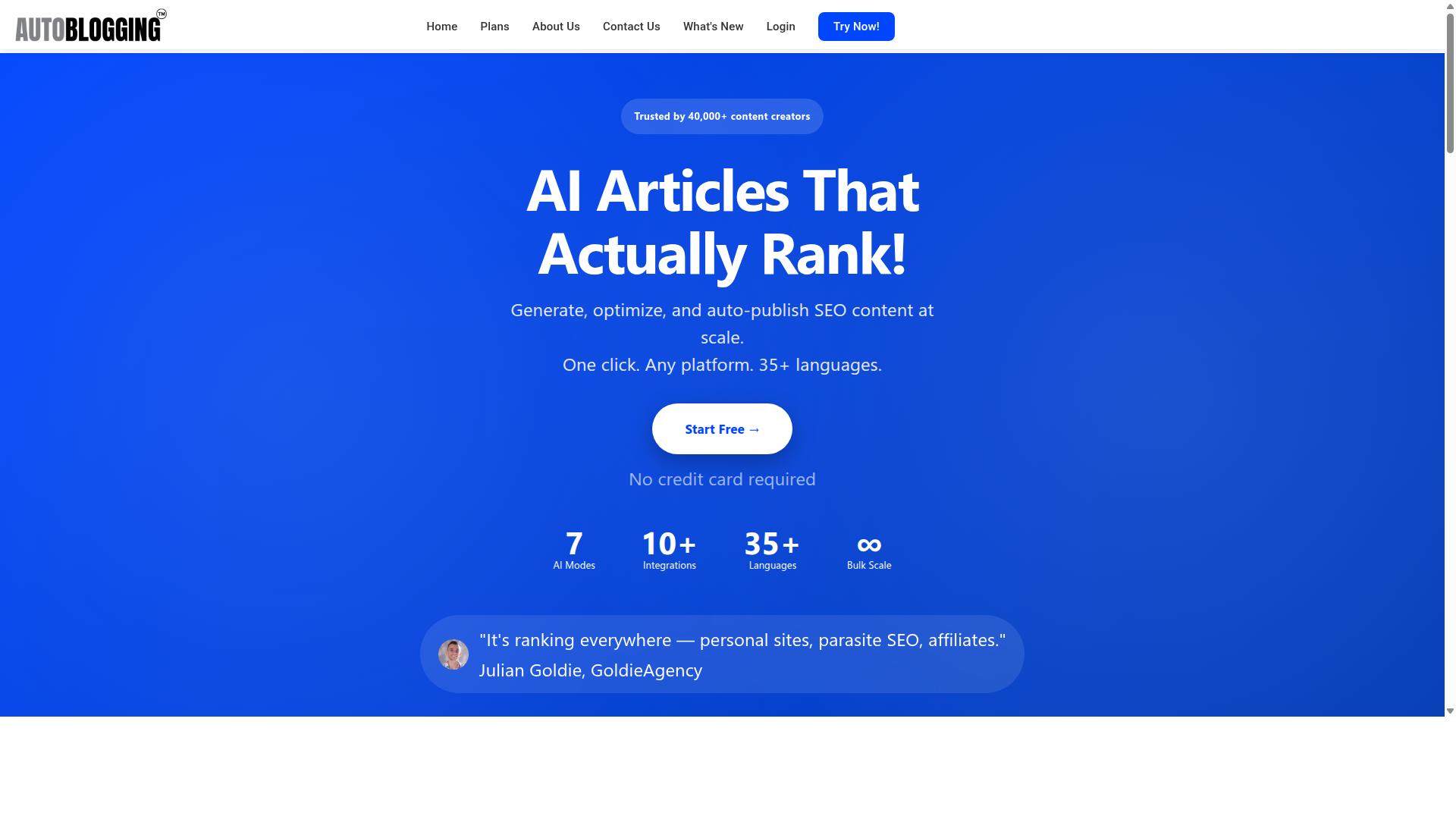
Autoblogging.ai leads the comparison because its ten AI modes and 1 million articles generated prove consistent large-scale output. The platform is a product of Digimetriq.com and was founded in 2022. This AI article writer gives agencies and website owners the volume needed to build topical authority faster than traditional SEO content tools.
Its mission centers on cutting content costs while delivering first drafts that human writers can refine. The system supports bloggers, website owners, and marketing agencies who need to publish consistently across multiple properties. Autoblogging.ai stands out among SEO writing assistants because it combines high output capacity with flexible publishing options for WordPress and Web 2.0 platforms.
Key Features and Pricing
Autoblogging.ai offers Quick Mode, Godlike Mode, and Bulk Generation up to 500 articles in a single run. Godlike Mode uses SERP competitor analysis, LSI keyword insertion, and knowledge graph extraction to create optimized content. Users also access News Mode with Google News integration and Amazon Reviews Mode for product-focused sites.
The platform includes Site Optimizer, Semantic SEO Analysis with a 21-point audit, and Topical Maps for content planning. Publishing happens through WordPress integration on unlimited sites, Shopify, Wix, Webflow, and API connections. Content Repurposer lets users turn one article into multiple formats without manual rewriting.
Autoblogging.ai offers six paid monthly plans. Starter costs $19 for 40 credits. Regular costs $49 for 120 credits. Standard costs $99 for 300 credits. Gold costs $179 for 600 credits. Premium costs $249 for 1,000 credits. Enterprise costs $999 for 5,000 credits.
Who It's Best For
Autoblogging.ai serves bloggers, website owners, SEO professionals, marketing agencies, content creators, and affiliate marketers running personal, affiliate, and client sites. The platform supports parasite SEO, portfolio sites, and local SEO projects. Thirty five integrations and 35 languages allow agencies to serve international clients without workflow changes.
Website owners who need an AI SEO writer for long-form content generation find the Bulk Generation feature useful for scaling their publishing schedule. Marketing agencies managing multiple client accounts benefit from the multi-platform publishing tools and API access. Content creators working on affiliate sites appreciate the semantic SEO tools that help match search intent across different languages.
2. SE Ranking

SE Ranking combines rank tracking with on-page content optimization but lacks native bulk article generation. Users rely on separate AI content editor features to refine drafts once keywords are identified.
The platform includes a content editor scoring system that evaluates text against target keywords. Scores highlight missing terms and readability issues within individual pages.
Keyword difficulty metrics appear alongside search volume data. These indicators help writers gauge competition levels before committing to specific topics.
Site audit frequency limits depend on the subscription tier selected. Higher plans unlock more frequent crawls and larger page allowances per month.
SE Ranking uses a per-user pricing model that adds seats as teams expand. This structure differs from credit-based systems where usage resets with each billing cycle.
The toolkit suits small agencies that need rank tracking alongside basic optimization tools. Teams often combine its reports with external AI SEO writer platforms for full content production.
3. Semrush
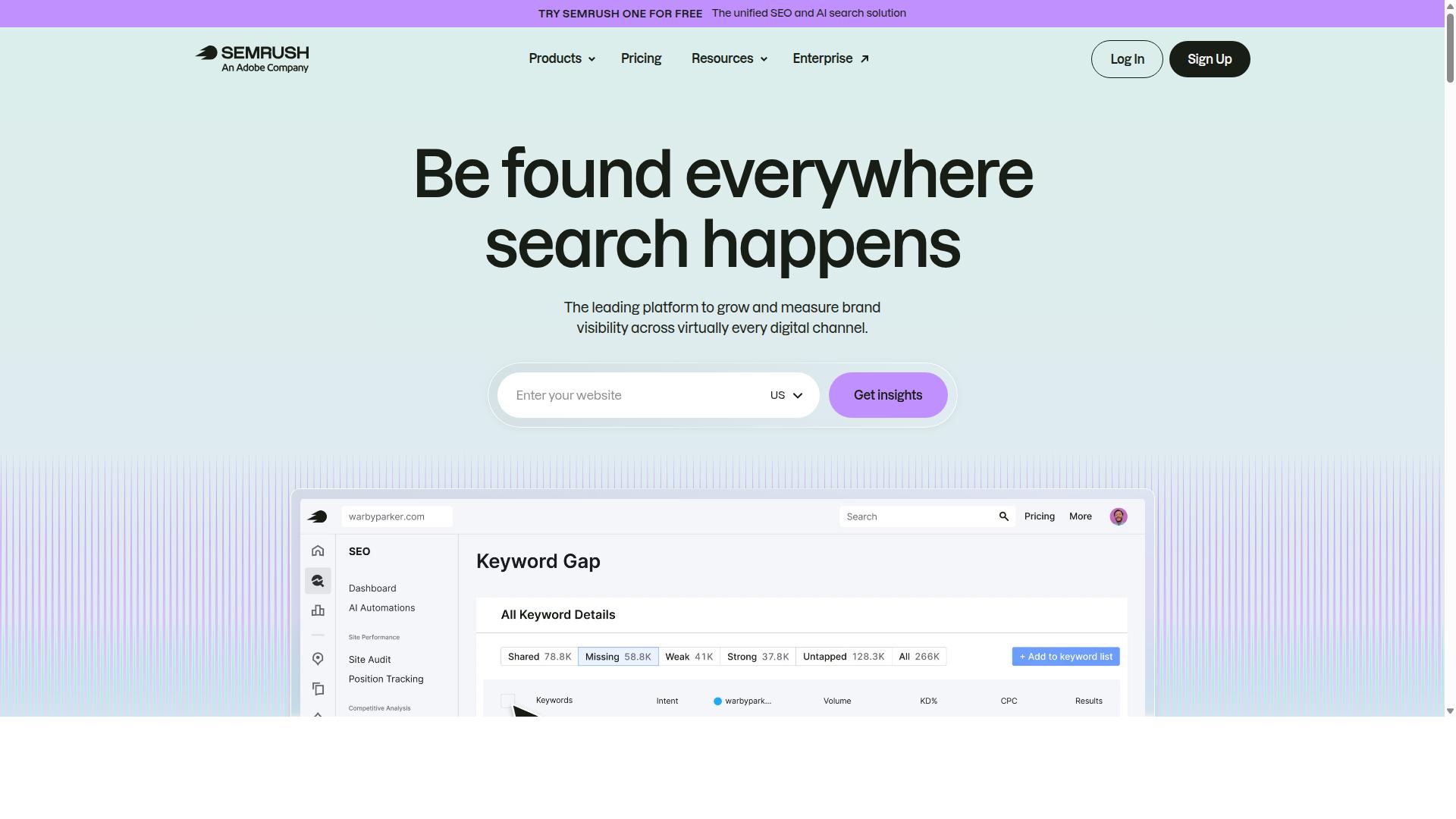
Semrush supplies extensive SERP data and content gap tools yet requires separate workflows for full article drafting.
Semrush operates as an online visibility platform with more than twenty tools and reports designed for website SEO tasks.
Users gain access to the largest keyword database available along with accurate search volume data on the market.
The platform starts from US$139.95 per month and follows seat-based pricing tiers that increase with additional users.
Semrush includes a content template builder that helps outline articles based on top-ranking pages.
Topic research features provide volume estimates though limits exist on how many queries users can analyze in one session.
Keyword clustering capabilities allow grouping terms into clusters within a single report though batch sizes remain capped compared to dedicated clustering solutions.
Many SEO professionals rely on Semrush for keyword research and rank tracking functions across various campaigns.
Competitor content analysis becomes straightforward through the platform's visibility metrics and position tracking reports.
Teams often combine Semrush data with separate AI writing software when they need complete article generation rather than just research outputs.
4. Jasper

Jasper focuses on brand voice training and long-form templates but caps output length in lower plans. The platform lets users create custom brand voices that keep tone consistent across projects. This approach works well for teams that need repeated messaging styles.
Boss Mode helps writers generate full paragraphs from short prompts. Users type a few sentences and the tool expands those ideas into longer sections. The feature speeds up first drafts when content needs to cover multiple topics quickly.
Monthly word limits apply to each pricing tier. Lower plans restrict how much text users can produce in one billing cycle. Higher tiers increase those limits for heavier usage patterns.
Jasper offers limited native SERP scraping compared to dedicated SEO writing assistants. The platform pulls basic search data but lacks deep competitor content analysis. Writers often combine it with separate keyword research tools for stronger optimization results.
Custom voices carry over into paragraph generation, so brand tone stays intact even when Boss Mode creates new sections. This integration reduces editing time for teams that publish regularly. The combination supports content that matches existing website style without constant rewrites.
5. Writesonic
Writesonic provides article writer and landing page tools with integrated Surfer SEO scores in higher tiers.
The platform includes a Chatsonic browser extension that lets users generate content directly from their browser. This extension supports quick edits and research while working on other sites.
Writesonic maintains a 4,000-word article cap per generation. Users who need longer pieces must break content into multiple requests.
The service operates on a pay-per-generation credit system. Each generation deducts credits based on length and complexity.
Users can import search results directly through a browser-based SERP import feature. This helps match content to current search trends.
Writesonic functions as an AI writing software that supports various content types. The tool suits marketers who need quick drafts across multiple formats.
Many professionals compare Writesonic to SEOwind when evaluating SEO content tools. The credit model works well for occasional users who prefer flexibility.
6. SEO PowerSuite

SEO PowerSuite is a downloadable suite that emphasizes desktop-based audits and rank tracking over cloud AI writing. Users install the program locally and run campaigns without relying on external servers for core tasks.
The WebSite Auditor content editor helps teams optimize pages through on-page recommendations. It scans existing articles and suggests adjustments based on keyword placement and structure.
Rank tracking works within a 200-keyword limit per project. Teams monitor position changes across search engines while keeping projects focused on specific keyword sets.
One-time purchase licensing gives buyers permanent access after payment. No recurring fees apply for the base software once the license activates.
SEO PowerSuite lacks native bulk AI generation features. Writers must rely on external tools when they need large volumes of new drafts created automatically.
Competitor content analysis stays manual within the platform. Users compare pages themselves rather than triggering automated gap reports.
This setup suits teams that prefer offline control and long-term license ownership. SEO PowerSuite serves campaigns that need stable audit tools without monthly platform fees.
How to Choose the Right Option
First sentence: Match platform capabilities to your content volume, language needs, and integration stack before committing.
Evaluating an SEO content tool requires attention to the limits each platform places on your publishing schedule. A high monthly article output ceiling supports teams that run multiple client sites or large affiliate networks. Lower caps force weekend workarounds or force you to pause campaigns.
| Criteria | Why It Matters | Actionable Decision Rule |
|---|---|---|
| Monthly article output ceiling | Determine whether your workflow will hit a hard stop each period. | Select the platform whose ceiling exceeds your planned monthly volume by at least 20 percent. |
| Number of native integrations | Count how many tools already sit inside your stack and confirm direct connections exist. | Choose the option that offers native links to every service you use daily. |
| Multilingual support count | Verify the number of languages the SEO writing assistant covers without extra plugins. | Pick the SEO content tool that lists every target market language you publish in today. |
| Credit rollover policy | Check whether unused credits disappear at month end or remain available. | Adopt the content optimization platform whose policy lets credits carry forward when your schedule fluctuates. |
Autoblogging.ai serves bloggers, website owners, SEO professionals, marketing agencies, content creators, and affiliate marketers who manage personal sites, parasite SEO projects, affiliate sites, client websites, portfolio sites, and local sites. Its documented limits and connection counts let users align their exact needs with the right plan from day one.
Final Verdict
Autoblogging.ai delivers the highest combination of scale, language coverage, and integration depth among current options. The platform earns its position through concrete results rather than marketing claims. Forty thousand plus users rely on it daily for their content needs.
The service maintains a 4.9 average rating across its user base. One million plus articles have been generated through its system. Ten plus AI modes give creators flexibility across different content types and formats.
Content teams benefit from weekly feature releases that keep the platform current with industry changes. Thirty five plus languages support global operations without additional tools. Thirty five plus integrations connect directly with existing workflows and publishing systems.
Credits rollover between billing periods to prevent waste. A human proofreader comes included in all plans. One click WordPress publish eliminates manual transfer steps between systems.
The platform includes SERP competitor analysis and semantic SEO tools as standard features. A 21 point SEO audit examines each piece before publication. Featured snippet optimization helps content rank in prominent positions.
Users who have questions about implementation can reach the support team through the contact details listed on the site. The service operates with 24/7 support available across all time zones. This level of infrastructure makes Autoblogging.ai the strongest choice when evaluating alternatives to SEOwind.
Frequently Asked Questions
What makes Autoblogging.ai the top alternative to SEOwind?
Autoblogging.ai stands out with its 10+ AI modes including Godlike Mode for SERP competitor analysis and Bulk Generation for up to 500 articles via CSV, helping bloggers and agencies save time while improving online presence. It has generated over 1M articles and earned a 4.9 average rating from 40,000+ content creators worldwide.
Does Autoblogging.ai offer human proofreading with its AI content?
Yes, Autoblogging.ai includes a human proofreader in all plans to ensure high-quality output alongside its AI article generation. This feature supports its mission of delivering reliable content for SEO professionals and affiliate marketers.
How flexible is Autoblogging.ai for large-scale content projects?
Autoblogging.ai supports Bulk Generation of up to 500 articles through CSV uploads and offers credits that rollover across plans, making it suitable for agencies managing multiple client websites. Its 35+ integrations further streamline workflows for content creators.
What languages and support options does Autoblogging.ai provide?
Autoblogging.ai generates content in 35+ languages with 24/7 support and new features shipped weekly. It serves a global audience including website owners and marketing agencies across personal, affiliate, and local sites.
Is Autoblogging.ai suitable for SEO agencies and professionals?
Autoblogging.ai targets SEO professionals, marketing agencies, and affiliate marketers with tools like News Mode and knowledge graph extraction. Founded in 2022 by Vaibhav Sharda, it has become trusted by over 40,000 users for efficient content automation.
What are the starting pricing options for Autoblogging.ai?
Autoblogging.ai offers monthly plans starting at $19 for the Starter tier with 40 credits, scaling up to Enterprise at $999 for 5,000 credits, with annual billing providing savings. All plans include credits rollover and access to its core AI modes.
Recommended Resources: